

Robot Parts CNC Machining: How to Choose a Reliable Manufacturer for Precision Robotic Components
Introduction
Robotics is transforming industrial automation, logistics, healthcare, agriculture, inspection, and many other industries. As robotic systems become faster and more precise, their mechanical components must meet increasingly demanding requirements.
Robotic arms, joints, structural frames, motor housings, end-effectors, mounting brackets, and transmission components often require tight tolerances, complex geometries, low weight, and reliable performance.
For this reason, choosing the right robot parts CNC machining manufacturer is an important step in developing a successful robotic system.
A capable manufacturing partner should do more than simply follow a drawing. The supplier should understand the relationship between material selection, machining strategy, tolerance, surface finish, assembly, and production cost.
This guide explains the main factors to consider when selecting a manufacturer for custom robotic components.
Why CNC Machining Is Widely Used for Robot Parts
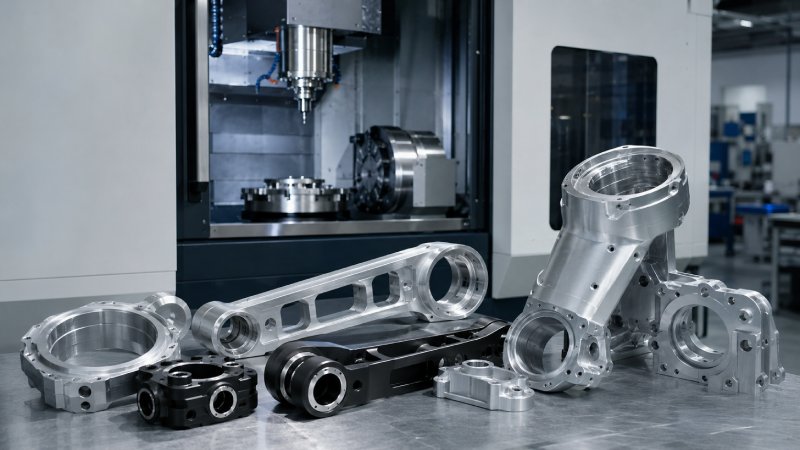
CNC machining is one of the most suitable manufacturing methods for robotic components because it provides high dimensional accuracy, excellent material flexibility, and consistent production quality.
Compared with many traditional manufacturing processes, CNC machining can produce complex parts directly from engineering drawings or 3D models without requiring expensive tooling.
It is especially suitable for:
Robot prototypes
Custom robotic arms
Joint and actuator components
Motor and gearbox housings
Sensor mounting parts
End-effector components
Structural brackets and frames
Precision shafts and couplings
Low-volume robot parts
Automation equipment components
CNC machining also allows engineers to test and improve a design before moving into larger-scale production.
Common Challenges in Robot Parts CNC Machining
Robot components may appear similar to ordinary mechanical parts, but their manufacturing requirements are often more demanding.
1. Complex Geometries
Robot parts frequently contain multiple angled surfaces, deep cavities, thin walls, precision holes, and complicated internal structures.
Producing these features with several setups may increase:
Positioning errors
Machining time
Fixture costs
Surface mismatch
Dimensional variation
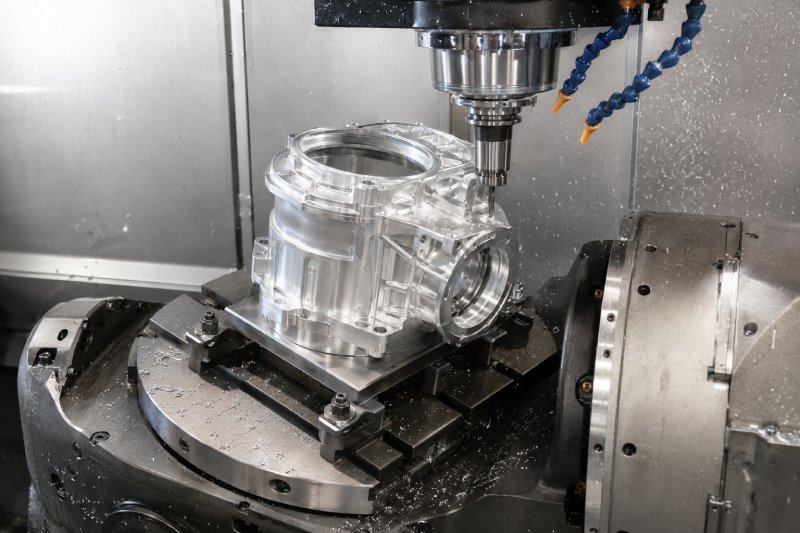
For complex components, 5-axis CNC machining can reduce the number of setups and improve the positional relationship between critical features.
2. Tight Tolerances
The movement accuracy of a robot depends heavily on the dimensional accuracy of its individual components.
Bearing seats, locating holes, shaft interfaces, and assembly surfaces may require tight tolerances. However, applying extremely tight tolerances to every dimension can unnecessarily increase manufacturing costs.
A reliable supplier should identify which features are critical to function and which dimensions can use standard machining tolerances.
3. Lightweight Design
Weight reduction is especially important for robotic arms and mobile robots. A lighter component can reduce inertia, improve movement speed, and decrease the load on motors and joints.
However, removing too much material can create:
Thin-wall deformation
Insufficient structural strength
Machining vibration
Poor surface finish
Dimensional instability
The best design balances weight reduction, rigidity, manufacturability, and cost.
4. Assembly Accuracy
Robotic components rarely work independently. They must fit bearings, motors, gears, sensors, fasteners, and other mechanical parts.
Even when every individual dimension appears acceptable, accumulated tolerance can still cause assembly problems.
Tolerance stack-up analysis should therefore be considered during the design and manufacturing stages.
Important Robot Components Produced by CNC Machining
Robotic Arm Components
Robotic arms require a combination of strength, low weight, and precise assembly.
Typical CNC-machined robotic arm parts include:
Arm links
Joint housings
Motor mounting plates
Bearing supports
Connection brackets
Base structures
Cable-routing components
Aluminum alloys are commonly used because they offer a good strength-to-weight ratio and can be anodized for additional surface protection.
Robot Joint Parts
Robot joints contain some of the most critical mechanical interfaces in a robotic system.
These components may require:
Accurate bearing bores
Concentric shaft features
Precision locating holes
Controlled perpendicularity
Stable assembly surfaces
Machining sequence and fixture design are particularly important because removing material can release internal stress and affect the final dimensions.
End-Effector Components
End-effectors allow robots to grip, lift, weld, inspect, polish, or assemble products.
Because every application is different, end-effectors often require customized:
Gripper fingers
Tool-mounting plates
Adapter flanges
Sensor brackets
Vacuum tooling components
Lightweight support structures
CNC machining is suitable for both prototype testing and low-volume production of these custom parts.
Motor and Gearbox Housings
Motor and gearbox housings must protect internal components while maintaining the correct alignment of shafts, bearings, and gears.
Critical machining requirements may include:
Bore concentricity
Flatness of mounting surfaces
Accurate hole positions
Sealing surfaces
Heat-dissipation features
These functional areas should be clearly identified on the engineering drawing.
Material Selection for CNC-Machined Robot Parts
Selecting the correct material affects the weight, strength, durability, machinability, and total cost of a robotic component.
Aluminum Alloys
Aluminum is widely used for robot parts because it is lightweight, machinable, and suitable for several surface treatments.
Common choices include:
6061 aluminum
Suitable for general robotic structures, brackets, housings, and prototypes.
6082 aluminum
Often selected for structural components requiring good strength and corrosion resistance.
7075 aluminum
Suitable for high-strength, lightweight components, although it is generally more expensive than 6061 or 6082.
Stainless Steel
Stainless steel provides good corrosion resistance, strength, and durability.
It can be used for:
Robot shafts
Fastening components
Precision interfaces
Medical robot parts
Food-processing automation parts
Components used in humid environments
However, stainless steel is heavier and generally more difficult to machine than aluminum.
Alloy and Tool Steels
Alloy steels can be selected for robot parts subjected to high loads, impact, or wear.
Depending on the application, heat treatment may be required to achieve the desired hardness and mechanical performance.
When heat treatment is involved, the manufacturer should consider possible distortion and reserve suitable machining allowance for final finishing.
Engineering Plastics
Engineering plastics are suitable for lightweight, electrically insulating, low-friction, or chemically resistant robot components.
Common materials include:
POM
PEEK
PA66
PTFE
PC
ABS
PEI
PAI
PVDF
Because plastics behave differently from metals during machining, the manufacturer must control heat, clamping pressure, and cutting parameters to reduce deformation.
Titanium Alloys
Titanium offers high strength, low weight, and excellent corrosion resistance. It may be used in aerospace robots, medical devices, and other high-performance systems.
However, titanium machining requires suitable cutting tools, stable machining conditions, and careful heat control. It is usually selected only when its performance advantages justify the additional cost.
Why 5-Axis CNC Machining Is Valuable for Robot Components
Many robotic components have features located on several sides or positioned at complex angles.
With traditional 3-axis machining, the part may need to be repositioned multiple times. Each repositioning introduces additional setup time and potential alignment error.
Five-axis CNC machining can provide several advantages:
Fewer machining setups
Better positional accuracy
Easier access to angled features
Improved machining of complex surfaces
Reduced fixture requirements
More consistent surface transitions
Shorter production time for suitable parts
However, not every robot part requires 5-axis machining. Simple plates, spacers, and brackets can often be produced more economically with 3-axis CNC milling or CNC turning.
A good manufacturer should choose the appropriate process instead of automatically using the most expensive machine.
How to Choose a Reliable Robot Parts CNC Machining Manufacturer
1. Evaluate Relevant Manufacturing Experience
General CNC machining experience is useful, but robot components require a clear understanding of functional interfaces, assembly relationships, and lightweight structures.
Ask whether the manufacturer has experience producing:
Robotic arm components
Automation equipment parts
Precision housings
Complex aluminum structures
Bearing and shaft interfaces
Custom end-effectors
Relevant experience can help identify manufacturing risks before production begins.
2. Review Machining Capabilities
The supplier’s equipment should match the requirements of the part.
Depending on the project, useful capabilities may include:
3-axis CNC milling
4-axis CNC machining
5-axis CNC machining
CNC turning
Turn-mill machining
Surface grinding
Electrical discharge machining
Coordinate measuring machine inspection
Machine capability alone does not guarantee good parts. Programming, tooling, fixtures, process control, and inspection are equally important.
3. Request a DFM Review
A design for manufacturing review can identify potential issues before material is purchased or machining begins.
A useful DFM review may cover:
Excessively tight tolerances
Deep cavities
Small internal corner radii
Thin walls
Difficult tool access
Unnecessary surface-finish requirements
Deformation risks
Expensive material choices
Features requiring special inspection
Early communication can reduce redesign work, manufacturing delays, and unexpected costs.
4. Confirm Inspection Capabilities
The inspection method should match the tolerances and geometry of the component.
Common inspection equipment includes:
Digital calipers
Micrometers
Height gauges
Bore gauges
Surface roughness testers
Optical measuring systems
Coordinate measuring machines
For complex robot parts, a CMM can help verify hole positions, geometric tolerances, profiles, and relationships between multiple features.
The drawing should clearly identify critical dimensions so that inspection resources focus on functional requirements.
5. Assess Material and Surface-Treatment Support
A manufacturer should be able to source the required material and coordinate suitable finishing processes.
Common finishing options for robot parts include:
Anodizing
Hard anodizing
Electroless nickel plating
Zinc plating
Chrome plating
Passivation
Black oxide
Polishing
Bead blasting
Powder coating
Surface treatment can affect dimensions, appearance, wear resistance, electrical conductivity, and corrosion performance.
Critical threaded holes, bearing seats, electrical contact areas, and precision fits may need masking or additional machining allowance.
6. Verify Prototype and Low-Volume Support
Robot development usually involves several design iterations.
A suitable manufacturer should support the transition from:
Initial prototype
Functional testing
Design optimization
Engineering validation
Low-volume production
Repeat manufacturing
Maintaining clear drawing revisions and inspection records becomes increasingly important as the project develops.
7. Do Not Choose Based Only on Price
The lowest quotation is not necessarily the lowest total cost.
A very low price may exclude:
Complete inspection
Correct material certification
Dimensional reports
Surface-treatment protection
Appropriate packaging
Necessary finishing operations
A late or unusable robot component can cost far more than the difference between two quotations.
Price should be evaluated together with technical capability, communication, quality control, and delivery reliability.
Information to Provide When Requesting a Quote
Complete technical information helps the manufacturer prepare a more accurate quotation and lead time.
Whenever possible, provide:
3D model
2D engineering drawing
Material specification
Quantity
Dimensional tolerances
Geometric tolerances
Surface-finish requirements
Heat-treatment requirements
Surface-treatment requirements
Critical assembly features
Inspection requirements
Expected delivery date
Common file formats include STEP, STP, IGES, X_T, SLDPRT, DWG, DXF, and PDF.
If the design is still under development, the manufacturer should clearly distinguish confirmed requirements from provisional information.
Common Design Mistakes That Increase Machining Cost
Several design decisions can make a robot part unnecessarily expensive.
Common examples include:
Specifying tight tolerances on noncritical dimensions
Designing deep pockets with very small corner radii
Using extremely thin walls without functional need
Requiring cosmetic finishes on hidden surfaces
Selecting high-cost materials without performance justification
Creating features that cannot be reached by standard cutting tools
Ignoring coating thickness on precision fits
Failing to define inspection standards
Sending conflicting 2D and 3D data
These problems can often be corrected during the DFM stage without changing the component’s function.
How CUSTPARTS Supports Custom Robot Part Manufacturing
CUSTPARTS provides custom manufacturing support for robot components, automation equipment parts, rapid prototypes, and low-volume production.
Available manufacturing options include CNC milling, CNC turning, 5-axis machining, 3D printing, and coordinated surface finishing for different metals and engineering plastics.
Projects can include:
Robotic arm components
Robot joint housings
Custom brackets
Motor mounting parts
Sensor supports
End-effector components
Precision shafts
Lightweight structural parts
Automation equipment components
Before production, the drawings and models can be reviewed for material selection, machining feasibility, tolerance requirements, surface treatment, and potential manufacturing risks.
Conclusion
Choosing a reliable robot parts CNC machining manufacturer requires more than comparing prices and lead times.
The right supplier should understand complex geometry, precision interfaces, lightweight structures, material behavior, surface treatments, and inspection requirements. The manufacturer should also provide practical feedback when a design creates unnecessary cost or manufacturing risk.
Clear drawings, realistic tolerances, suitable materials, and early DFM communication can improve quality while reducing production delays and avoidable expenses.
For a new robot prototype or a low-volume production project, CUSTPARTS can review your drawings and help evaluate the most appropriate manufacturing approach.
Send your 2D drawings, 3D models, or other technical files for a DFM review, machining assessment, and quotation.