

Electroless Nickel Plating vs Chrome Plating for CNC Machined Parts: Differences, Benefits, and Applications
Meta Description:
Compare electroless nickel plating vs chrome plating for CNC machined parts. Learn the differences in coating thickness, hardness, corrosion resistance, wear resistance, tolerance control, cost, and applications.
Electroless nickel plating and chrome plating are two widely used surface finishing processes for CNC machined parts. Both coatings can improve corrosion resistance, wear resistance, surface hardness, and component service life, but their coating properties and suitable applications are significantly different.
Electroless nickel plating is generally preferred for precision CNC machined parts that require uniform coating thickness, corrosion protection, complex geometry coverage, and dimensional consistency.
Chrome plating, especially hard chrome plating, is commonly used for shafts, rods, pins, rollers, and other mechanical components that require high surface hardness, low friction, and excellent wear resistance.
Choosing the wrong plating process can increase manufacturing costs, affect dimensional tolerances, reduce component performance, and shorten service life.
This guide compares electroless nickel plating vs chrome plating in terms of:
Coating process
Coating thickness
Corrosion resistance
Surface hardness
Wear resistance
Friction
Dimensional tolerance
Suitable materials
Typical CNC machining applications
Cost considerations
Understanding these differences can help engineers and product designers select the appropriate surface treatment for precision CNC machined parts.
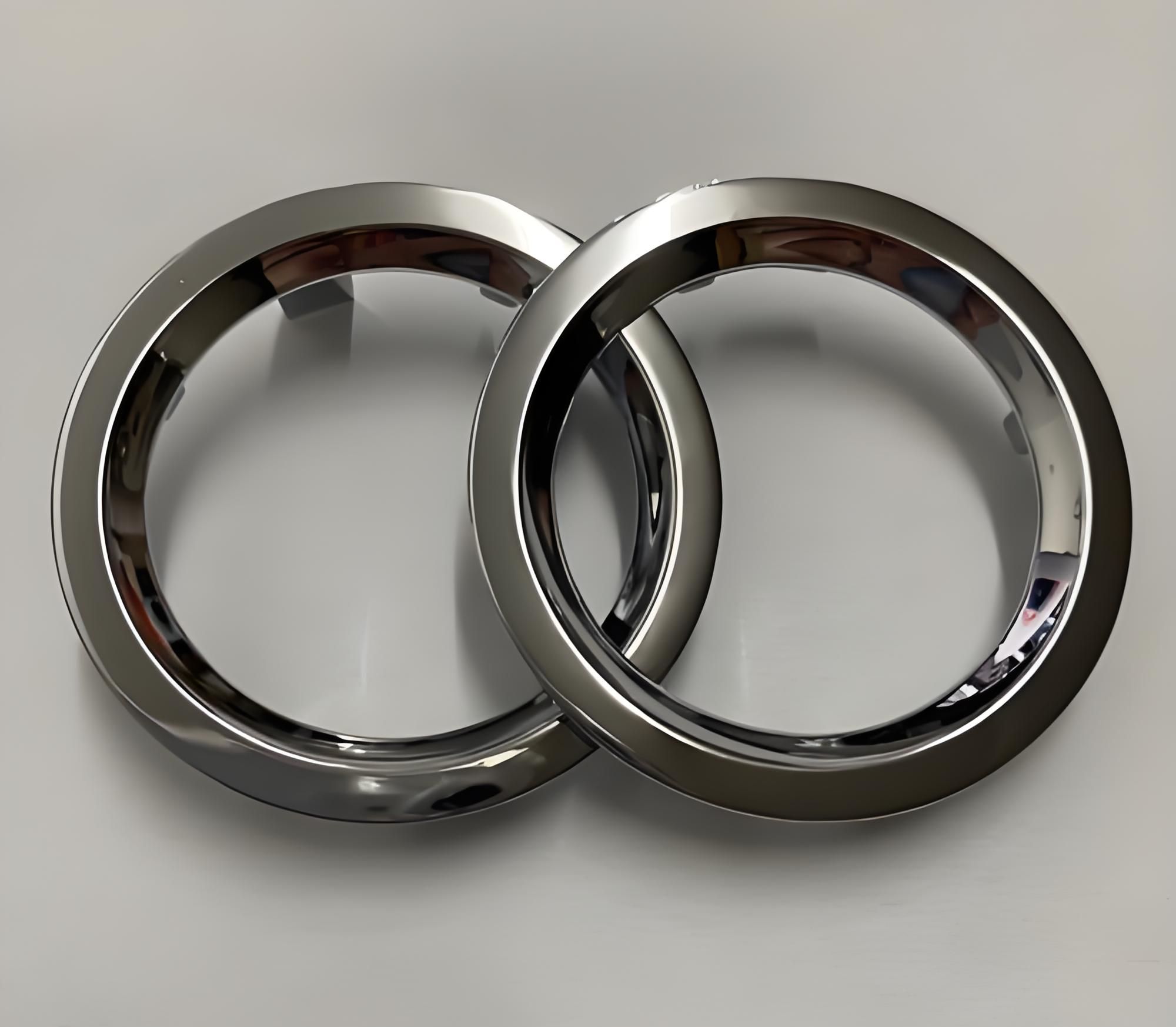
What Is Electroless Nickel Plating?
Electroless nickel plating, often called EN plating, is a chemical deposition process that applies a nickel-based coating to the surface of a component without using an external electrical current.
The most common electroless nickel coatings are nickel-phosphorus alloys.
Unlike conventional electroplating processes, electroless nickel plating uses a controlled chemical reaction to deposit the coating.
One of its most important advantages is uniform coating thickness.
Because the process does not depend on electrical current distribution, electroless nickel plating can provide relatively consistent coverage on:
Complex CNC machined geometries
Internal holes
Recessed areas
Slots
Threads
Cavities
Precision surfaces
This characteristic makes electroless nickel plating particularly suitable for CNC machined components where corrosion protection and dimensional consistency are important.
Common Applications of Electroless Nickel Plating
Electroless nickel plating is widely used for:
Precision CNC machined parts
Aluminum housings
Steel mechanical components
Automation equipment parts
Robotic components
Sensor housings
Valve components
Pump components
Fixtures and tooling
Fluid system parts
Electronic equipment components
Corrosion-resistant mechanical parts
For complex CNC machined parts with tight tolerances and multiple internal features, electroless nickel plating is often a practical surface finishing option.
What Is Chrome Plating?
Chrome plating is an electroplating process that deposits a layer of chromium onto the surface of a component.
The process uses electrical current to deposit chromium from an electrolytic solution.
There are two main categories of chrome plating:
Decorative chrome plating
Hard chrome plating
Although both processes use chromium, they serve different purposes.
Decorative Chrome Plating
Decorative chrome plating is primarily used to improve:
Surface appearance
Brightness
Corrosion resistance
Decorative performance
It is commonly applied when a smooth, reflective, and visually attractive surface is required.
Hard Chrome Plating
Hard chrome plating, also called industrial chrome plating or engineered chrome plating, is primarily used for functional mechanical applications.
Its main advantages include:
High surface hardness
Excellent wear resistance
Low friction
Improved component service life
Resistance to repeated mechanical contact
Hard chrome plating is commonly used for:
Hydraulic rods
Shafts
Pins
Rollers
Sliding components
Mechanical guides
Mold components
Machine tool parts
Wear-resistant surfaces
For CNC machined parts exposed to repeated sliding contact or severe mechanical wear, hard chrome plating may provide better performance than electroless nickel plating.
Electroless Nickel Plating vs Chrome Plating: Key Differences
The main difference between electroless nickel plating and chrome plating is their coating behavior and intended application.
| Comparison Factor | Electroless Nickel Plating | Hard Chrome Plating |
|---|---|---|
| Deposition Process | Chemical deposition | Electroplating |
| Coating Uniformity | Excellent | Geometry-dependent |
| Corrosion Resistance | Excellent | Good to very good |
| Surface Hardness | High, especially after heat treatment | Very high |
| Wear Resistance | Good to excellent | Excellent |
| Low Friction | Good | Excellent |
| Complex Geometry Coverage | Excellent | More difficult |
| Internal Surface Coverage | Better | Limited depending on geometry |
| Tight Tolerance Applications | Very suitable | Requires careful process control |
| Typical Applications | Precision components, housings, valves, automation parts | Shafts, rods, pins, rollers, sliding parts |
| Decorative Appearance | Smooth industrial metallic finish | Bright and reflective finish available |
The correct choice depends on the functional requirements of the CNC machined component.
If uniform coating thickness, corrosion resistance, and dimensional consistency are the main priorities, electroless nickel plating is generally the better option.
If extreme surface hardness, low friction, and heavy wear resistance are more important, hard chrome plating may be more suitable.
1. Coating Thickness and Uniformity
Coating thickness is one of the most important differences between electroless nickel plating and chrome plating.
Electroless Nickel Coating Thickness
Electroless nickel plating provides highly uniform coating thickness because the deposition process does not rely on electrical current distribution.
This makes it suitable for CNC machined parts with:
Complex geometries
Internal holes
Recessed surfaces
Slots
Threads
Cavities
Precision fitting surfaces
Uniform coating thickness is particularly important when the component has tight dimensional tolerances.
Chrome Plating Thickness
Chrome plating is an electroplating process.
The coating distribution may vary depending on:
Component geometry
Electrical current density
Sharp edges
Recessed areas
Surface accessibility
Exposed edges may receive thicker deposits, while recessed areas may receive less coating.
For high-precision CNC machined components, this variation must be considered during part design, machining, and plating.
2. Corrosion Resistance
Electroless nickel plating generally provides excellent corrosion resistance due to its dense and relatively uniform coating structure.
It is commonly used for components exposed to:
Moisture
Industrial environments
Mild chemicals
Humidity
General corrosion risks
The corrosion performance of electroless nickel plating can vary depending on coating thickness, phosphorus content, base material, surface preparation, and operating environment.
Chrome plating can also improve corrosion resistance.
However, hard chrome coatings may contain microcracks depending on the plating process and coating characteristics.
If corrosion resistance is the primary requirement, electroless nickel plating is often preferred.
For severe chemical exposure, marine environments, or aggressive operating conditions, engineers should evaluate the complete combination of base material, coating specification, coating thickness, and service environment.
3. Hardness and Wear Resistance
Hard chrome plating is well known for its high surface hardness and excellent wear resistance.
It is commonly used for mechanical components exposed to:
Sliding contact
Repeated friction
Mechanical wear
High-load contact
Continuous movement
Typical examples include hydraulic rods, shafts, pins, rollers, and mechanical guide components.
Electroless nickel plating also provides good wear resistance.
Heat-treated electroless nickel coatings can achieve significantly higher hardness and improved wear performance.
Therefore, the selection should not be based only on the assumption that chrome plating is always harder or more wear-resistant.
The actual decision should consider:
Coating specification
Required hardness
Type of mechanical wear
Operating temperature
Corrosion environment
Dimensional tolerance
For applications requiring a balance between corrosion resistance, wear resistance, and dimensional consistency, electroless nickel plating can be an effective solution.
For severe sliding wear and low-friction mechanical surfaces, hard chrome plating may be the better choice.
4. Dimensional Tolerance Control
Surface treatment must be considered during the CNC machining process, especially for precision components.
If a CNC machined part requires a final tolerance of ±0.01 mm or ±0.02 mm, the plating thickness may directly affect the finished dimensions.
Critical dimensions should clearly specify whether the tolerance applies:
Before plating
After plating
This is especially important for:
Precision bores
Shafts
Bearing fits
Mating surfaces
Threads
Sealing surfaces
Assembly interfaces
Because electroless nickel plating provides more uniform coating thickness, it is often easier to account for during CNC machining.
Hard chrome plating may require additional operations such as:
Masking
Controlled plating
Grinding
Polishing
Final dimensional inspection
For high-precision CNC parts, coating requirements should be reviewed during the DFM stage rather than after machining is completed.
5. Suitable Materials
Materials Suitable for Electroless Nickel Plating
Electroless nickel plating can be applied to many engineering materials, including:
Carbon steel
Alloy steel
Stainless steel
Aluminum alloys
Copper
Brass
Tool steel
Certain cast iron materials
For aluminum CNC machined parts, electroless nickel plating is often selected when corrosion resistance, wear resistance, and dimensional consistency are required.
Materials Suitable for Chrome Plating
Chrome plating is commonly applied to:
Carbon steel
Alloy steel
Tool steel
Stainless steel
Cast iron
Certain copper alloys
Hard chrome plating is especially common for steel mechanical components such as shafts, rods, pins, and rollers.
The suitability of any plating process depends on proper surface preparation and the specific base material.
6. Surface Appearance
Electroless nickel plating typically produces a smooth metallic finish that may appear silver-grey or slightly yellowish depending on the coating composition and process.
The finish is generally clean and suitable for industrial components.
Chrome plating can provide a brighter and more reflective surface.
Decorative chrome is commonly selected when visual appearance is an important product requirement.
However, appearance should not be the primary selection criterion for functional CNC machined components.
For industrial parts, engineers should prioritize:
Corrosion resistance
Wear resistance
Surface hardness
Friction
Coating thickness
Dimensional tolerance
Operating environment
before considering appearance.
7. Complex Geometry and Internal Features
Complex geometry is another important factor when comparing electroless nickel plating vs chrome plating.
Electroless nickel plating can provide more consistent coverage on:
Internal holes
Deep recesses
Complex surfaces
Slots
Cavities
Small features
This makes it particularly useful for precision CNC machined parts used in robotics, automation equipment, valves, pumps, and industrial machinery.
Chrome plating is more dependent on electrical current distribution and component geometry.
Special tooling, auxiliary anodes, masking, or process adjustments may be required for complex components.
Therefore, for parts with complicated geometry and strict dimensional requirements, electroless nickel plating is often the more practical choice.
8. Cost Considerations
The cost of electroless nickel plating and chrome plating depends on several factors:
Base material
Part dimensions
Part geometry
Coating thickness
Surface preparation
Masking requirements
Production quantity
Grinding requirements
Inspection standards
Tolerance requirements
Electroless nickel plating may cost more than basic surface treatments such as zinc plating or black oxide, but it offers better coating uniformity and corrosion resistance.
Hard chrome plating can also become expensive when components require:
Thick coatings
Complex masking
Precision grinding
Polishing
Strict dimensional inspection
The lowest-cost surface treatment is not necessarily the most economical solution.
Selecting the wrong coating can lead to premature wear, corrosion failure, assembly problems, and expensive rework.
9. When Should You Choose Electroless Nickel Plating?
Choose electroless nickel plating when:
Uniform coating thickness is important
High corrosion resistance is required
The component has complex geometry
Internal surfaces require coating
Dimensional consistency is important
The part has tight tolerances
The component is made from aluminum or steel
A combination of corrosion and wear resistance is required
The part is used in automation equipment
The component is used in robotics
The part is used in valves, pumps, sensors, or precision machinery
For complex precision CNC machined parts, electroless nickel plating is often an effective surface treatment solution.
10. When Should You Choose Hard Chrome Plating?
Choose hard chrome plating when:
Very high surface hardness is required
Severe wear resistance is important
Low friction is required
The component experiences repeated sliding contact
The part is a shaft, rod, pin, or roller
The component requires improved service life
The customer drawing specifically requires hard chrome plating
For high-wear mechanical surfaces, hard chrome plating remains a widely used industrial coating.
11. Electroless Nickel Plating or Hard Chrome: Which Is Better for CNC Machined Parts?
There is no single answer for every CNC machined component.
Choose electroless nickel plating for:
Complex Precision Components
Its uniform coating thickness makes it suitable for parts with complicated geometry and internal features.
Corrosion-Resistant Parts
Electroless nickel plating is commonly selected when corrosion protection is a primary requirement.
Tight-Tolerance Components
Uniform coating thickness makes dimensional changes easier to predict and control.
Aluminum CNC Machined Parts
Electroless nickel plating can improve the surface properties and corrosion resistance of aluminum components.
Choose hard chrome plating for:
Shafts and Hydraulic Rods
Hard chrome provides high wear resistance and low friction.
Sliding Mechanical Components
It is suitable for components exposed to repeated mechanical contact.
High-Wear Surfaces
Hard chrome plating is commonly used when surface durability and hardness are critical.
Components Requiring Low Friction
Chrome surfaces can provide effective performance for specific sliding and mechanical applications.
12. Design Tips for CNC Parts Requiring Plating
Before sending a CNC machined part for electroless nickel plating or chrome plating, engineers should confirm several important requirements.
Specify the Coating Type
Do not simply write “nickel plating” or “chrome plating” if the application requires a specific process.
Clearly specify:
Electroless nickel plating
Decorative chrome plating
Hard chrome plating
Specify the Required Coating Thickness
The coating thickness can affect:
Final dimensions
Fits
Threads
Bearing surfaces
Assembly performance
Define Tolerances After Plating
For critical dimensions, clearly indicate whether the tolerance applies before or after surface treatment.
Identify Masking Areas
Some surfaces may need to remain uncoated.
These areas should be clearly identified on the engineering drawing.
Provide Application Information
The CNC machining supplier should understand:
Operating environment
Mechanical loads
Wear conditions
Corrosion exposure
Temperature
Assembly requirements
This information helps determine whether the specified plating process is appropriate.
Frequently Asked Questions
Is electroless nickel plating better than chrome plating?
It depends on the application. Electroless nickel plating is generally better for uniform coating thickness, corrosion resistance, complex geometries, and precision CNC machined parts. Hard chrome plating is often better for high-wear surfaces, sliding components, shafts, and applications requiring very high surface hardness.
Which coating is better for aluminum CNC machined parts?
Electroless nickel plating is commonly used for aluminum CNC machined parts when improved corrosion resistance, wear resistance, and surface performance are required. The appropriate coating specification depends on the aluminum alloy and application requirements.
Which plating process is better for tight tolerances?
Electroless nickel plating is generally easier to control on complex precision components because it provides relatively uniform coating thickness. However, the plating thickness must still be considered when defining final dimensional tolerances.
Is hard chrome plating suitable for precision CNC parts?
Yes. Hard chrome plating can be used for precision CNC machined parts, particularly shafts, rods, pins, and wear surfaces. However, additional grinding or finishing operations may be required to achieve strict final dimensions.
Can electroless nickel plating improve wear resistance?
Yes. Electroless nickel plating provides good wear resistance, and certain heat-treated coatings can achieve significantly higher hardness. The actual performance depends on coating composition, thickness, heat treatment, and service conditions.
Should plating thickness be included in CNC machining drawings?
Yes. For precision components, the engineering drawing should specify the plating type, coating thickness, masking requirements, and whether critical tolerances apply before or after plating.
Conclusion
Electroless nickel plating and chrome plating are both valuable surface treatments for CNC machined parts, but they are designed to solve different engineering problems.
Electroless nickel plating is generally preferred for:
Uniform coating thickness
Corrosion resistance
Complex geometries
Internal features
Dimensional consistency
Precision CNC machined parts
Hard chrome plating is generally preferred for:
High surface hardness
Severe wear resistance
Low friction
Sliding components
Shafts and rods
Heavy-duty mechanical applications
The correct surface treatment should be selected based on the base material, component geometry, dimensional tolerances, coating thickness, operating environment, wear conditions, and final application.
If you are developing CNC machined components for robotics, automation equipment, industrial machinery, or precision mechanical systems, send us your 2D drawings and 3D models.
Our engineering team can review the material, tolerances, component geometry, and application requirements to help determine whether electroless nickel plating, hard chrome plating, or another surface treatment is more suitable for your project.
Need custom CNC machined parts with electroless nickel plating or hard chrome plating? Contact us for DFM review and quotation.