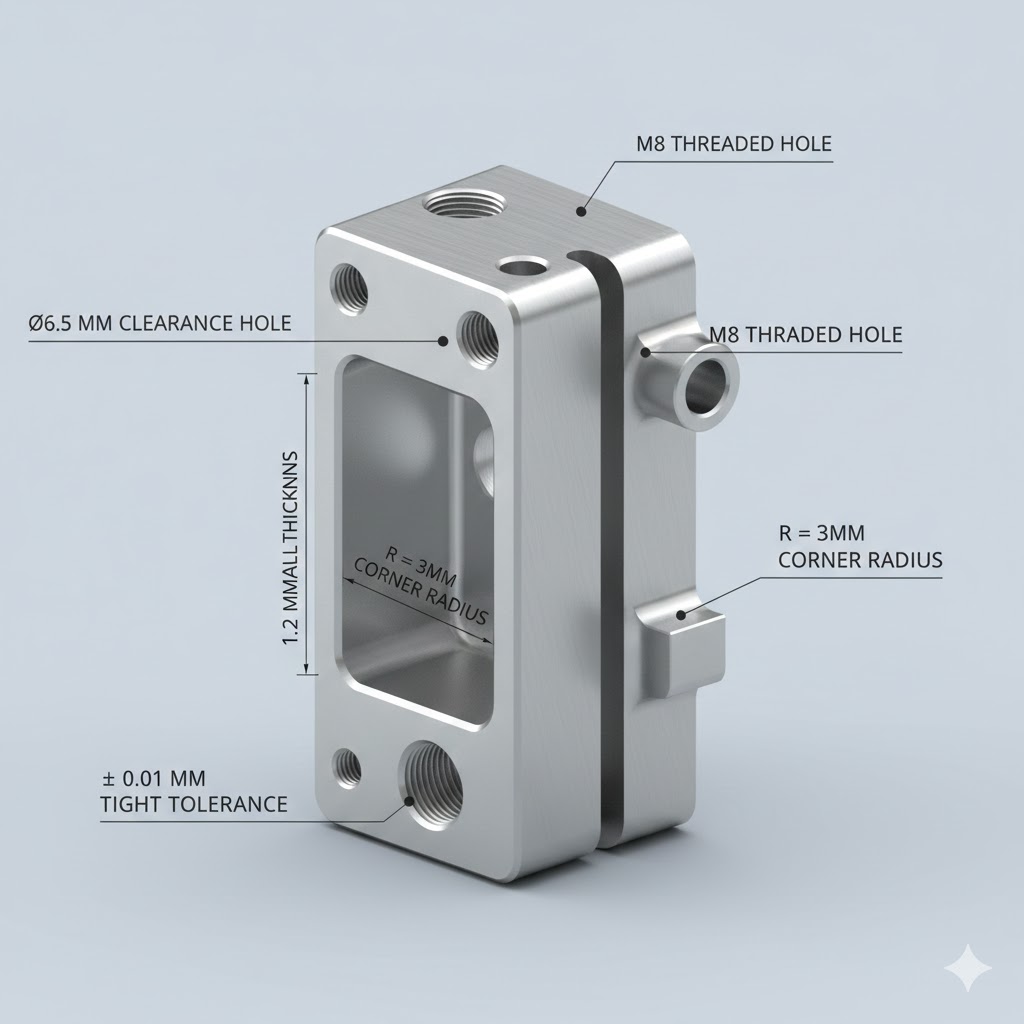
Mastering Design for CNC Machining: A Guide to Precision and Cost-Efficiency
Designing parts for CNC (Computer Numerical Control) machining requires a shift in mindset from pure aesthetics to Design for Manufacturing (DfM). While CNC is incredibly versatile, the physical limitations of cutting tools—such as their circular shape and limited reach—dictate whether a part will be easy to manufacture or prohibitively expensive.
This article outlines the fundamental design principles that ensure your parts are optimized for CNC production.
1. Internal Corners and Radii
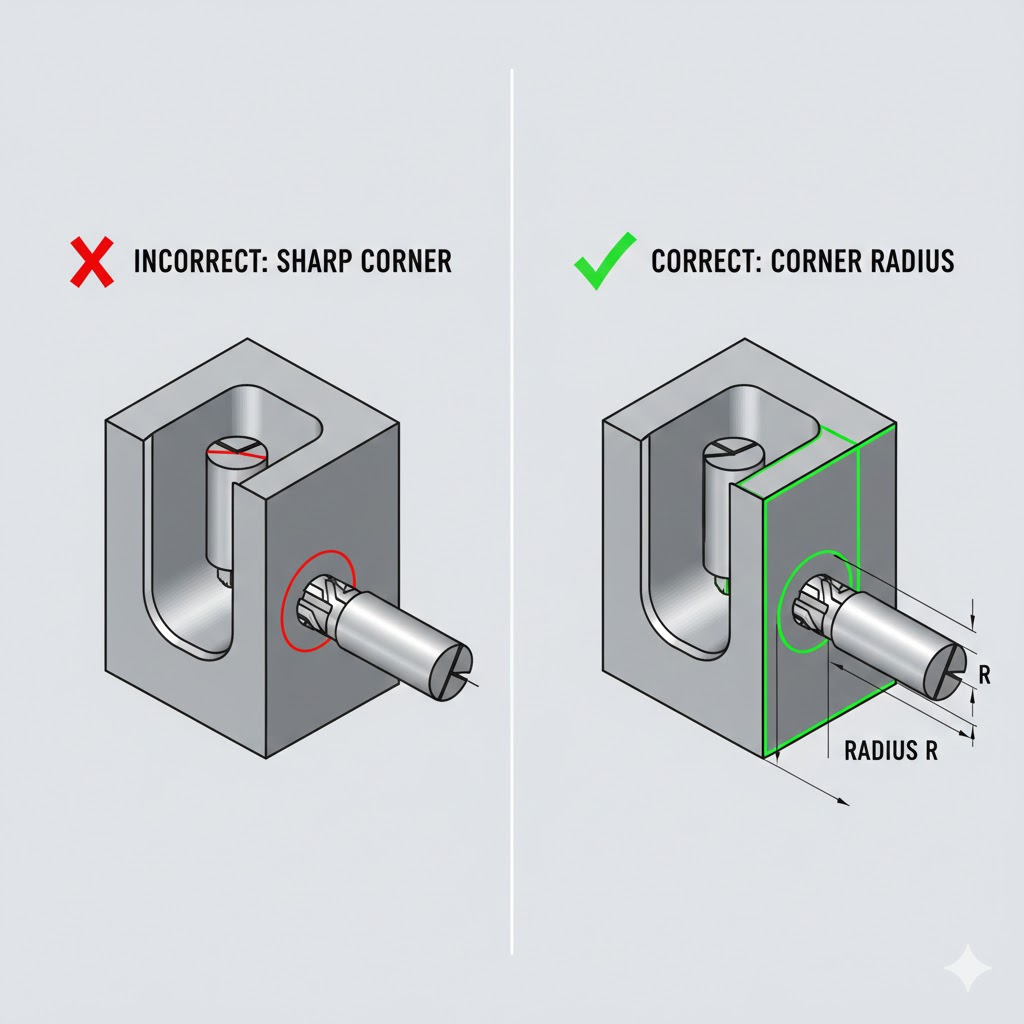
One of the most common design errors is specifying sharp internal vertical corners. Because CNC milling tools are cylindrical (end mills), they cannot create a perfectly sharp 90-degree internal corner.
The Rule: Always add a radius to internal vertical edges.
Pro Tip: Make the corner radius slightly larger (e.g., by 0.1mm) than the radius of the cutting tool. This allows the tool to move smoothly through the corner without "burying" itself, reducing vibration and tool wear.
2. Pocket Depth and Tool Reach
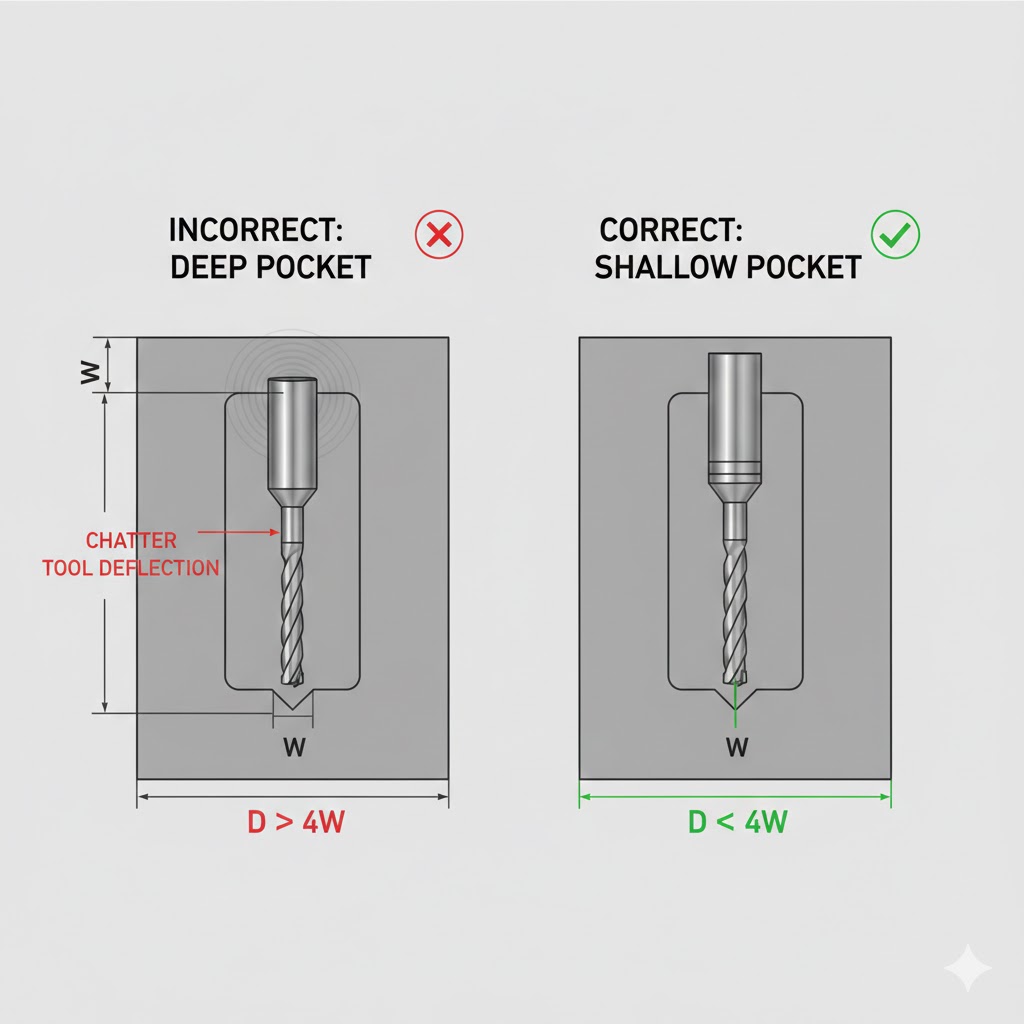
While it is tempting to design deep, narrow pockets, these are challenging for CNC machines. Long, thin tools are prone to chatter (vibration) and breakage, leading to poor surface finishes and inaccuracy.
The Aspect Ratio: Ideally, the depth of a pocket should not exceed 4 times its width.
Tool Deflection: As tools get longer, they deflect (bend) under the pressure of the cut. If you must design a deep pocket, you may need to increase the internal radii to allow for a thicker, more rigid tool.
3. Minimum Wall Thickness
Thin walls are a major cause of part failure during machining. The heat and mechanical stress of the cutting process can cause thin sections to warp or even snap.
Recommended Minimums: * Metals:$0.8$ mm (though $1.2$ mm is safer for large surfaces).
Plastics:$1.5$ mm (plastics are more prone to warping due to heat).
Rigidity: Stiffer walls allow for faster machining and better tolerances.
4. Hole Design and Threading
Standardization is the key to reducing costs in hole design.
Use Standard Drill Sizes: Design hole diameters to match standard metric or imperial drill bits. Custom hole sizes require an end mill to "circle-interpolate," which takes more time.
Thread Depth: Most of the holding power of a screw is in the first 3 diameters of the thread. Avoid designing incredibly deep threaded holes; they increase the risk of the tap breaking inside your part.