

Use Cases of Robots in Manufacturing
The use of robots is often associated with the pursuit of efficiency and productivity. According to the International Trade Administration, across all industries, every 1% increase in robot density leads to a 0.8% increase in productivity. Today, robotics in manufacturing is the highlight of this ongoing story, with robots now present at every stage of the manufacturing process across all industries.
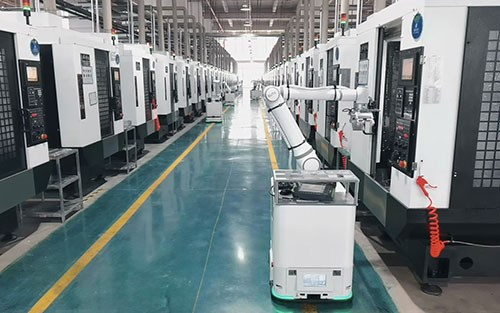
Use Cases for Robotics and Automation in Manufacturing
There are several exciting use cases for robotics in manufacturing that are only beginning to be applied on the factory floor. For example, 3D printing technology allows manufacturers to use robots to efficiently produce complex parts, assemblies, and products. By producing products on demand rather than in large batches, manufacturers can significantly reduce warehousing costs while producing products to the customer's exact specifications, allowing for greater design flexibility without the associated setup and production costs.
Other manufacturing areas that are well suited for robotics include tasks that require a high degree of autonomy and intelligence to enable complex decision-making or problem-solving, such as maintenance and repair. By combining predictive analytics with robotics, the system can identify potential maintenance issues and then automatically trigger the robot to perform repairs, all without human intervention.
Robotics can also significantly improve worker health and safety. Manufacturing robots can take on dangerous tasks, helping to reduce the risk of accidents or injuries. It also reduces the need for humans to perform repetitive tasks, allowing people to focus on more complex and interesting work.
Advancing Robotics in Manufacturing
As robots become more affordable and ubiquitous in manufacturing, they are making their way from large factories to the smallest manufacturing plants. But to fully leverage the use of robots in manufacturing, companies must also invest in other technologies, including:
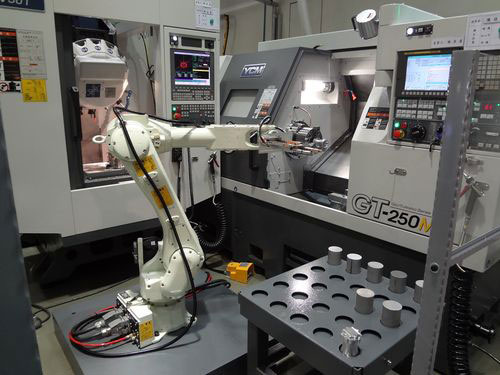
Sensors and control systems
These basic components enable robots to navigate and interact with their surroundings by sensing obstacles and other objects. Using cameras, LiDAR sensors that create a 3D map of the environment, force sensors that detect contact, and other sensors that detect sound and infrared radiation, the robot's control system can synthesize information and decide how to interact in the environment to complete tasks safely and efficiently.
Internet of Things (IoT)
By connecting, monitoring, and managing operations in near real time, manufacturers can gain deeper insight into their processes and optimize the use of robots. By exchanging information with other systems and devices, such as other robots, sensors, and control systems, factories can achieve just-in-time manufacturing processes, ensuring seamless coordination across the entire manufacturing chain.
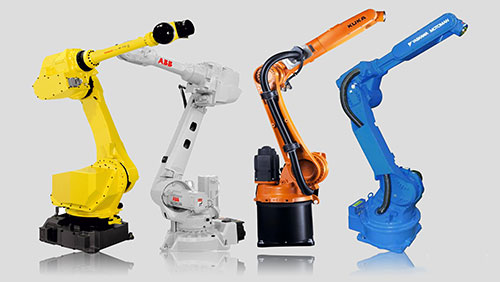
Artificial Intelligence and Machine Learning
By learning from experience, robots can adapt to perform tasks more efficiently without being limited by their initial programming.
Edge Computing
The more digitized the manufacturing process, the more data is generated. Edge computing technology enables robots to access and analyze large amounts of data to help improve processes and enable predictive maintenance. Advanced analytics enabled by edge computing enable manufacturers to analyze operational data and identify trends so they can make data-driven decisions to optimize the use of robots.